
Conflict of Interest and the OVA-OGC Question
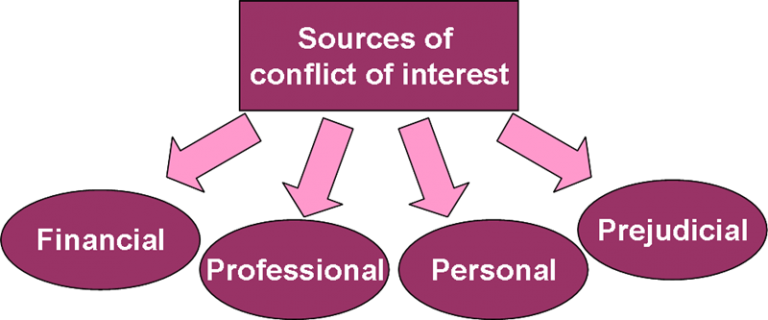
Much has been said on social media about the potential conflict of interest of OVA directors, as they decide on whether or not to provide a rather huge amount of support to OGC (OGC asks for at least $1.4M over the next 5 years). The intent of this article is four-fold: first, to review what conflict of interest is and what Davis-Stirling (California law governing HOA governance) and OVA’s own ethics policy says about it; second, to let everyone know how each member of the OVA Board of Directors responded to questions about his involvement in golf or the OGC, and his decision to recuse himself or not on issues relating to the OVA-OGC question, as well as providing him an opportunity to briefly explain his position; third, to provide some commentary on issues of interpretation and director answers, and, finally, to express my opinion on what standard for conflict of interest should be used in this specific case. I will state, up front, that I believe that any director should disclose to his constituents any information that may be prejudicial to a decision the board must make, or which may be perceived as a conflict of interest. If he is not willing to do that, he shouldn’t be a director.
Conflict of interest and California law
Three web pages from the Davis-Stirling.com website provide the basis for my understanding of the law relative to conflict of interest:
I make no claim to legal expertise, but these pages are fairly easy to read and understand.
The first Davis-Stirling page declares that board members are fiduciaries and that, as such, “they are held to a higher standard and must avoid conflicts of interest.” In particular, “Directors must act in the best interests of the association even if at the expense of their own interests.”
From the second Davis-Stirling page:
Conflicts of interest occur when a board member’s decisions are influenced by his/her personal interests rather than the interests of the association, which can lead to breaches of their fiduciary duties.
. . .
Not a Conflict. Oftentimes board members vote on matters that result in a benefit to them that is not a conflict of interest because the matter also benefits the membership as a whole. For example, if a board member votes to add security patrols to the development, there is no conflict of interest since the benefit he receives from the patrol is same benefit received by all members of the association.
. . .
Regardless of whether he has a material financial interest, a director “may not make decisions for the association that benefit their own interests at the expense of the association and its members.”
. . .
directors must recuse themselves from discussion and voting on issues in which they have a direct personal or pecuniary interest not common to other members of the board. (Robert’s Rules, 11th ed., p. 407.)
The third Davis-Stirling page defines”recusal”:
“Recusal” or to “recuse” oneself means to remove oneself from participation in a decision so as avoid a conflict of interest.
No member should vote on a question in which he has a direct personal or pecuniary interest not common to other members of the organization. . . . (Robert’s Rules, 11th ed., p. 407.)
Recusal normally occurs when a director has a conflict of interest or prejudice concerning a particular matter. A conflict of interest is any situation in which financial or other personal considerations may unduly influence the director’s judgment. . . .
Leave the Room. In each case, the director has a personal interest in the outcome of the vote – an interest not shared by other directors. In such instances, the interested director should leave the meeting room so the remaining directors can freely discuss and vote on the issue. (California’s Fair Political Practices Act, Calif. Code of Reg. §18702.5.) Once the vote is taken, the recused director may return to the meeting.
Conflict of interest is critically important, because a director with a legal conflict of interest relative to any issue is not allowed to participate at all in the decision making about that issue (preceding paragraph). Some situations are not clearly a conflict of interest, and those grey areas will be discussed in the Commentary section below.
Note that financial interest is not essential for recusal to be required. It is sufficient that a director has a prejudice concerning the matter at hand, which is not shared by the membership at large, and which might cause a director to vote differently from the way an unprejudiced director would vote. Note, also, that recusal is not simply not voting on an issue; recusal means walking out of the room whenever the issue is discussed, and not expressing an opinion to other board members about the issue.
In order to show a financial conflict of interest for an HOA Board member, one needs to show that his financial status would be improved if the contemplated action is approved by the Board. This seems clear for proprietary OGC members, for any proposal to provide financial support to OGC, because the value of their memberships would go up with OVA support. This value might only be realized if the club were liquidated, but it is value, nevertheless.
Ethics Policy for OVA Directors and Committee Members
The document of this title is dated November 21, 2017, and is available on the Oakmont Village website at https://oakmontvillage.com/wp-content/uploads/2018/01/2017-11-21-BoD-Aprvd-Ethics-Policy-for-OVA-Dtrs-Committees.pdf . I must presume that all directors have signed it, including those directors elected this spring.
Relevant quotes:
A. BOARD RESPONSIBILITIES The general duties for directors are to enforce the association’s governing documents, collect and preserve the association’s financial resources, insure the association’s assets against loss, and keep the common areas in a state of good repair. . . .
B. PROFESSIONAL CONDUCT
1. Self-Dealing. Self-dealing occurs when directors or committee members make decisions that materially benefit themselves or their relatives at the expense of the association. . . .
C. WHEN CONFLICTS OF INTEREST ARISE
Situations may arise that are not expressly covered by this policy or where the proper course of action is unclear. Directors and committee members should immediately raise such situations with the board. If appropriate, the board will seek guidance from the association’s legal counsel.
1. Disclosure & Recusal. Directors and committee members must immediately disclose the existence of any conflict of interest, whether their own or others. Directors and committee members must withdraw from participation in decisions in which they have a material interest. . . .
There is general consistency between the Ethics Policy and Davis-Stirling. In fact, the Ethics Policy affirms the obligation of directors to bring any unclear situations to the attention of the Board, and to immediately disclose and recuse themselves if a conflict of interest exists. The one difference I note is that the Ethics Policy only mentions “material interest”, i.e. financial interest, where Davis-Stirling uses a broader standard that includes non-financial interests: “influenced by his/her personal interests rather than the interests of the association.” Davis-Stirling, because it is state law, takes precedence.
The OVA Board of Directors: OGC involvement and who has recused himself
I have queried each director, individually, and their responses to these questions are shown below. “Refused to Answer” means either that they did not respond to my Email or that they responded, but did not answer the question.
The questions:
-
Do you or your spouse currently have an ownership interest in the Oakmont Golf Club, i.e. are you a full or proprietary member?
-
Are you or your spouse either current or past (since 2008) members of the Oakmont Golf Club?
-
Do you or your spouse play golf at least twice a month, or have either of you done so within the past 10 years?
-
If you answered “yes”to either question 1 or 2, then have you decided to completely recuse yourself from all discussions and voting related to the issue of OVA financial support for OGC?
-
What is the effective date of your recusal, after which you have not taken part in any such discussions or voting?
OVA director responses:
|
Question # |
Spanier |
Kendrick [2] |
Neufeld |
Medeiros |
Klyn |
Bettencourt |
Goodwin |
|
1. Owner mbr |
Yes |
RefAns |
No |
RefAns |
No |
RefAns |
No |
|
2. OGC mbr |
Yes |
RefAns |
Yes |
RefAns |
No |
RefAns |
No |
|
3. Play golf |
Yes |
RefAns |
No |
RefAns |
No |
RefAns |
No [3] |
|
4. Recusal |
Yes [1] |
RefAns |
No |
RefAns |
No |
RefAns |
No |
|
5. Eff date |
May 3 |
RefAns |
N/A |
RefAns |
N/A |
RefAns |
N/A |
RefAns = Refused to Answer, N/A = Not Applicable
Notes (quotes, where present, have been authorized by the directors responding):
[1] Since recusing himself in May, Spanier has not been attending OVA-OGC meetings, which are led by Kendrick. But he does not believe that he has to abide by the “Leave the Room” rule. His authorized quote:
I have not and will not vote on OGC issues. Because I probably know more about the OGC than any other Director, I have, when asked, answered operational questions such as
What is the difference between a public, semi-private and private golf club?
Who owns the OGC?
What does the OGC own?
Why would people join the OGC rather than just pay as they go?
What facilities exist at the East and West golf course areas?
Certainly the OGC could also have answered these questions, but they’re currently answering much more involved questions, so the board felt I could reduce the number of questions we needed to ask them.
[2] Kendrick replied but refused to answer my questions, and did not authorize me to quote his rationale – see Commentary section below under “Scope of recusal” for my opinion about some of what he told me.
[3] Goodwin occasionally plays golf, but less than twice a month.
Commentary
Financial conflicts: In order to show a financial conflict of interest for an OVA director, one needs to show that his financial status would be improved if OVA chooses to provide financial support to OGC. This seems clear for proprietary OGC members, because the financial value of their memberships would go up with OVA support. This value might only be realized if the club were sold or liquidated, but it is value, nevertheless, and value that is not shared by the OVA membership at large.
When is an affiliation Not a Conflict? See Conflict of interest and California law section above. A financial interest of a Board member is not a conflict of interest if the financial interest involved applies to the OVA membership as a whole. The argument is made that, because of the likelihood that a thriving OGC has a positive effect on property values throughout Oakmont, OGC membership is not a conflict. Property values may be enhanced by the presence of OGC, but that does not cancel out the fact that OGC owner members (“proprietary members” or “full members”) have financial interests that go beyond those of us who are not owner members. Such Board members have a clear legal conflict of interest.
Non-financial conflicts of interest are more of a grey area, because everyone in Oakmont has some degree of interest in such things as green vistas, fire breaks, etc, and there is great variation depending on home location. The same would be true of almost any other decision of substance that the Board might make. I will argue, in the next section, for a particular standard relative to the OGC question, which is reflected in the questions I asked of the directors, but it is necessarily my opinion, and you are entitled to your own opinion on the what constitutes a non-financial conflict of interest.
Scope of recusal: In my view, the recusal should apply to the overall issue, not just to discussion once a resolution is on the table for a vote. This would mean that, as soon as the issue of financial support of OGC by OVA came up, many months ago, any director who had a conflict of interest, as defined above, was required to “Leave the Room” at any time any other directors were discussing the issue. I don’t think it means he can’t discuss it freely with non-directors (who don’t get to vote on it), provided, of course, that such non-directors are not being used as a means of communication to other directors. The opposing view, expressed to me by Kendrick, is that the conflict of interest only applies in the context of a pending decision, i.e. when a specific resolution is on the table for a vote. I can’t explain why he would think that, because it seems obvious to me that a director who needs to recuse himself, under Kendrick’s standard, could negotiate and argue for any proposal right up until it was turned into a resolution for voting, and that has to be against the intent of conflict of interest law.
Refusal to answer: I believe that every director has an ethical obligation to reveal to his constituents (all OVA members) any significantly relevant fact that might cause a significant prejudice for or against any important decision to be made by the Board. Any director who refuses to answer my simple questions is keeping relevant facts from OVA members, whether or not he believes that those facts constitute a conflict of interest. I am an OVA member, so I take his refusal to answer, either directly to me or in a public statement, as a strong indication that this person should not be a director. Period.
Unfortunately, the following directors have refused to answer: Kendrick, Medeiros, Bettencourt.
My preferred standard for whether or not an OVA director should recuse himself on the OVA-OGC question
First, I believe that a legal, enforceable conflict of interest exists for any OVA director who is an owner member of OGC, for reasons stated above. This is not a matter of preference, but a matter of law. Many would go further and say that any director who owns a property bordering the golf course also has a legal conflict of interest, because he has a financial interest (the value of his home) which is demonstrably more dependent on the health of OGC than those who do not own property adjacent to the golf course. I am sympathetic to that view, but my own standard does not include ownership next to the golf course – it just feels like going a bit too far.
My preferred standard doesn’t require, however, that a director have a financial interest. There may be directors who are non-owner members, or even who are not members of OGC, but who golf regularly and enjoy the company of other golfers who may be OGC members. I believe that such close association and the shared enjoyment of a beloved sport is very likely to affect the outlook of the persons involved in such a way that they will be prejudiced to favor OGC proposals for OVA support, even if they are not consciously aware of such a prejudice or deny such a prejudice. I would further extend that to those who, while not participants themselves, are married to ones who are – most of us would have a prejudice to support our spouse in such a situation. I would not expect a person to lose such a prejudice if circumstances caused him to no longer participate, so I would expect past participation to also be a strong indicator of prejudice.
Any such prejudice, as described in the preceding paragraph, might cause an OVA director to have poor judgment in the matter of OVA financial support for OGC, thus either consciously or unconsciously favoring the small minority who are members of OGC over the best interests of Oakmont at large. For this simple reason, I believe that any OVA director should recuse himself on the OVA-OGC issue if:
-
he or his spouse is now or, within the past 10 years, has been a member of OGC, or
-
he or his spouse plays golf regularly (say, twice a month or more often) or has done so within the past 10 years.
One final note on this subject. Conflict of interest is a legal term, which is ultimately defined by decisions in a court of law. The OVA Board of Directors uses legal counsel to advise them on whether or not they need to recuse themselves, from a legal standpoint. In my opinion, this tells them what they can probably get away with if it were ever brought to a court of law, but even there, lawyers and judges frequently have different opinions on an issue.
I will go further and say that an ethical conflict of interest may exist even when a legal one does not. The law defines what is legal, and not what is right, and my preferred standard is based on what I believe is right – I am not very qualified to say what is legal. I understand that what is right is a matter of opinion. My standard, as expressed above, is only my opinion, and it is up to each of you to decide what you believe is right. It is also your right to let your directors know what you think on this issue (and any other).
My judgement on each director
Spanier has recognized that he must recuse himself, and has publically announced that he has done so. He is in violation of Davis-Stirling for waiting as long as he did, while actively talking with OGC management and preparing to provide them with support, but at least he eventually recognized his obligation to recuse. His current level of providing information about the OGC may be appropriate, but it certainly does not meet the Leave the Room standard.
Kendrick replied to my Emails and has refused to make his OGC affiliation status known, and so he meets my criteria for someone who should not be a director. If he is an owner member of OGC, he is guilty of the worst behavior relative to conflict of interest law, because he holds the position of Liaison to the OGC and is in the middle of the OVA-OGC negotiations. If he doesn’t golf and has no OGC affiliation, then he is merely violating our trust by effectively telling us “none of your business” when we have every right to know.
By my standard, Neufeld should be recusing herself. She gave no rationale for her answers, but I presume she is of the opinion that, without financial involvement, there is no conflict. I give her credit for answering and making her status known.
Medeiros did not reply to any of 3 Emails I sent to him with the questions. This places him in the same category as Kendrick – should not be a director and should be considered to have a conflict of interest in this matter.
Klyn replied honestly and thoughtfully, and has no conflict of interest.
Bettencourt did not reply to any of 3 Emails I sent to her with the questions. This places her in the same category as Kendrick – should not be a director and should be considered to have a conflict of interest in this matter.
Goodwin replied honestly and thoughtfully, and has no conflict of interest.
Summarizing, we have two directors with no conflict of interest (Klyn, Goodwin), one who is a non-owner OGC member and admits no conflict of interest (Neufeld), one who is an owner member of OGC and has recused himself (Spanier), and three who refuse to reveal to OVA members whether or not they are affiliated with OGC (Kendrick, Medeiros, Bettencourt)
As you can tell from my earlier comments, my harshest criticism is reserved for those who think it is OK to keep this relevant information a secret from the OVA membership. I have no quarrel with any director who won’t talk to me but otherwise makes public his OGC affiliation status, but to refuse to let constituents know is unconscionable. Of course, if any of those directors decides to go public with their answers, I’ll say “better late than never”, but it will not be the same as it would if they had done the right thing from the start.
I would like to see the OVA Board agree and establish legally defensible criteria for which of the directors should recuse himself relative to the OGC issue, and ask all directors to honor that criteria. Then, of course, it should be public knowledge who is recused and who isn’t. This would resolve the criticism due to the fact that, to date, it has been totally up to each director whether or not he chose to recuse himself.


Bruce,
Very helpful article. Much appreciated.
I’ve one clarification and one question.
Paragraph under C.1. above regarding OVA’s Ethics Policy. You state: “…only mentions material interest, i.e., financial interest…” and posit that there is thus a distinction between the Ethics Policy and the DS law on this point.
Perhaps you misunderstand the legal meaning of the word “material”. It does not refer to tangible material such as money but rather to meaningful relevance.
I.e., “Material” means being both relevant and consequential. E.g., testimony that is material to the inquiry.
My point: both DS and our Ethics Policy definitely include non-financial interests.
A question. You state that Spanier claims to have recused himself on May 3 and that “he has publicly announced that he has done so”. I can find no record at all of any such “public” announcement. Are you claiming that a public announcement was made or just repeating Spanier’s claim that one was made? Please also cite all source material for any public announcement that was made.
Gerry, I think you are right about the definition of “material interest”. I looked a bit further, and it seems not well defined, but to mean substantial as opposed to trivial interest. I think it is an indication that there is some undefined threshold below which courts will not interfere. Some of the articles I came across assert that the law does not protect against bad decisions by a board, e.g. choosing an expensive bid for some work over an otherwise equivalent cheaper bid. And that a court might consider some matter to be too trivial to require court intervention. I don’t have much feeling for what such a threshold would be, but I think it might vary, case by case, and judge by judge.
I don’t know where you could find any documentation of Spanier’s public announcement of recusal, and I agree that there should be one. If nothing else, you can consider the quote in the article, since he specifically gave me that quote to be included in this article. I got one independent report of his having referred to his recusal, I think at the pickleball ribbon cutting ceremony. Beyond that, I have several personal Email exchanges with him on the matter. The date of May 3 came from his recent communication to me, reporting that May 3 was his date of recusal based on his receiving a legal opinion on that date. I haven’t seen the legal opinion, and I don’t expect that he will release it. I’m somewhat agnostic on whether or not such opinions should be released — there may be reasons not to, and one of them might be that it would inhibit a director from seeking a legal opinion on an issue if his expectation was that any such opinion would be made public.
“What is the difference between a public, semi-private and private golf club?
Who owns the OGC?
What does the OGC own?
Why would people join the OGC rather than just pay as they go?
What facilities exist at the East and West golf course areas?
Certainly the OGC could also have answered these questions, but they’re currently answering much more involved questions, so the board felt I could reduce the number of questions we needed to ask them.” (Steve Spanier)
What are the ‘much more involved questions’, and who asked them if not the OVA Board?
It is unfortunate that when this association was conceived the two golf courses where not included as property from the beginning. The support for golf would have been incorporated into the annual dues as is the case at my former residence in Arizona. I am no longer a golfer but feel that the courses add an attractiveness to our community that would be sorely missed, I also live on a fixed budget but would accept a “reasonable: dues increase. If I had been so fortunate to have purchased a home on the golf course, I would be ready to blow my stack and look for a lawyer to pursue a lawsuit against OVA to recoup the lost value in my home if the courses were closed. This is a subject that is less than likely to be resolved easily.
Nola,
You will be looking for a lawyer for a long, long time. There’s no money in nonsense legal filings. And there’s a high probability of you paying damages and the legal fees of the defendant if the defendant chooses to respond to your lawsuit before the Court itself just dismisses your lawsuit for lacking a “cause of action”.
Lawsuits require a legal “cause of action” to be asserted BEFORE they are even allowed to be adjudicated. Your filing wouldn’t even make it past the Court’s junior law clerk.
OVA has no responsibility whatsoever to protect the value of your home from the actions of a wholly non-OVA entity deemed OGC. OGC has no responsibility whatsoever to protect, e.g., your view of these non-OVA golf courses. Indeed, when you purchased your home OVA explicitly informed you in writing that OVA does not guarantee or protect your view of even OVA property.
In short, you’ve no cause of action. You’ve no viable legal (or rational) basis for a filing.
Your home today and tomorrow is worth exactly what it actually sells for today or tomorrow — no more and no less. So how, pray tell, do you envision proving that (1) it’s lost value, and (2) that the cause had anything whatsoever to do with OVA or OGC?
If you are distressed and going to blow your stack, then please take your concerns where they belong: to the OGC.
Bruce,
1. Your example of a board’s “bad decision” has no relevance to the issue at hand. The issue at hand and violation of the law would be if the high bid that was accepted was from a firm in which a non-recused-but-voting BD member had an ownership or otherwise conflicted interest.
2. No Court, I assure you, is likely to consider the transfer of $1.4 million (assuming no inflation) or more than $1.7 million (assuming 5%/yr inflation) over 5 years from a fiduciary to a company in which the fiduciary had an ownership or other material interest to be a “trivial” matter. Particularly when the fiduciary’s social status and social activities are so entwined with the recipient of the transferred funds.
3. So, long-short, May 3 is not the EFFECTIVE date of the alleged recusal by Spanier. It’s only the date that Spanier claims to have received some advice from some unidentified legal counsel. And, as of June 12, Spanier is reported to have stated in a speech at the SIRS #92 meeting that his recusal was simply “a real possibility”. Hence, even by June 12 he had not recused himself.
So what is Spanier’s explanation for the 5 week lapse between his claimed May 3 date of being legally advised that he had to recuse himself and the June 12 date by which he had still failed to recuse? When, if ever, since June 12 has Spanier actually recused himself?
And what is the claimed effective date of any such recusal?
I’d suggest that you have a further communication with Spanier, garner his answers to these questions, and then update/correct your article accordingly.
4. If that legal counsel was in any manner funded by the OVA, then the “work product” is the property of OVA, not Spanier. He’s wishes regarding the release of this work product to it’s rightful owners, the Oakmont community that paid for it, are not relevant.
5. If, on the other hand, Spanier sought and paid for advice from a personal attorney, then the resultant work product is obviously their own property and their own business.
Nola and Gerry — I would appreciate it if you would keep back and forth not directly related to the article to NextDoor. You could add replies to https://nextdoor.com/news_feed/?post=86375462 or start your own discussion, which is where I think Nola’s comment belongs. Having that discussion here will only give fuel to those who may claim that the Oakmont Observer is just an extension of NextDoor and thus not relevant (I’m not saying ND is irrelevant, but there are board members who do).
Gerry — I don’t mean your last reply, which does relate directly to my article and makes some good points. I agree completely with your first 2 points. I’m not going to bug Steve about his date of recusal, though I think your questions are reasonable, mainly because I want to keep respectful communication open with him and such directly critical communication would tend to cut that off with little to be gained. I don’t think he chose a date of recusal until I asked the question in late June, and I think you are right that there was no specific date on which he stopped all discussion of OGC. In fact, per his own quote, he will still answer questions, which means he is still in the room and listening, and that presence along with earlier expressions of opinion (before recusal, whenever that was) is clearly prejudicial, at least to some degree.
It is up to the reader to judge whether Steve and other board members are doing the right thing, and whether to challenge them about it. You have his Email just as I do. Part of the problem is that, if he only hears from a handful of us, he can characterize us, either to himself or to others, as outlying whiners who are irrelevant to the center of the bell curve of opinion whom he wants to please. I am seeing more names, on both sides of the issue, pop up in ND discussions, and that is a good thing, because it both adds balance and makes it more difficult to dismiss.
I’m not ready to take a position on release of legal advice, because I can see pros and cons, but I acknowledge your point of view that it is product that we paid for and thus should have access to. We would also be paying for legal counsel in some employment dispute, where confidentiality would prevent the advice from being made public, for example. For me, this issue would require more study and is not my highest priority right now. Perhaps you should develop a policy proposal that you could present to the Board for possible adoption. From what I understand, it takes 2 board members to put an issue on the agenda for a board meeting.
Nola, In communities where golf courses were not owned by the HOA but where, due to alleged or actual financial distress of the golf club, HOA BOD’s imposed mandatory fees and dues on homeowners to support the golf courses, homeowners sued to stop these fees and the courts ruled in favor of the homeowners, not the HOA BOD.
Just a minor update, in response to the August 1 Oakmont News article by OVA manager Kevin Hubred, entitled Conflict of Interest. The article quotes part of a legal opinion by Brad Epstein.
Points:
First, Mr. Epstein is the attorney suggested by Kevin to the Board of Directors, with the obvious goal of supporting what the Board wants to do. His opinion, while having the authority of someone trained in law, is just that, an opinion.
Second, in my research on the subject, I encountered a number of examples where material interests were not financial, so the definition of material interests as only financial interests is hardly universal — again, it is an opinion.
Finally, as I pointed out in my article, there is the law and then there is what is actually reasonable and ethical, a standard that is subjective but which may be more stringent than the law. Perhaps I should have used the term “special interests” to describe such interests that I find to be in conflict with a director’s making good decisions on the OGC question.
The bottom line is still that you are entitled to your own opinion as to whether or not a director’s connection to golf or OGC should make him recuse himself for discussions and decision on the OGC question. And you are also entitled to your own opinion as to whether or not withholding such information from the membership is an ethical thing to do — my opinion is that it is not.