
Fire: Let’s not Press Our Luck
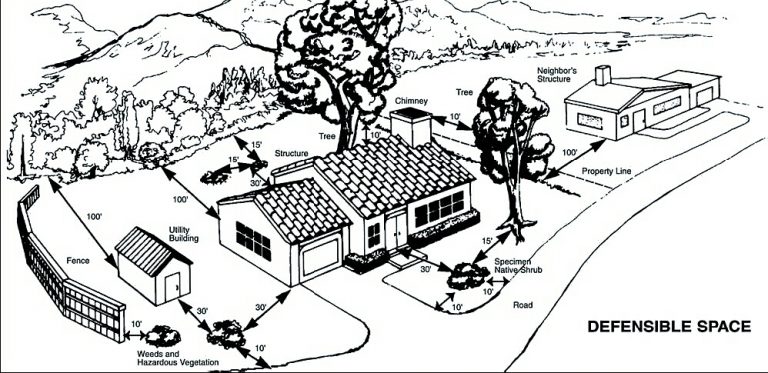
Fortunately, most Oakmont residents, despite evacuations and stress, did not lose our homes in last year’s fires, but we can no longer assume that these kinds of devastating fires are once-every-half-century events. We have already had red flag warnings this year, earlier than what used to be called “the fire season.” Fires in California are expected to be more frequent, burn longer, cost more and in Cal-Fire designated “Wildland Urban Interface” (WUI) areas, at higher risk of occurrence. Oakmont is in a WUI area due to the proximity to Annadel and Hood Mountain Parks.
In addition to the hilly parks that surround us, as you drive through Oakmont, it’s easy to see that we have other significant issues of fire safety. Highly-flammable plants such as junipers grow under our windows and fill our front yards. Did you know that these plants, once valued for their year-round greenery and drought tolerance, are nicknamed “gasoline plants” by firefighters and are listed in the top 10 most-flammable plants? Oakmont is loaded with them, along with other highly-flammable plants such as manzanitas, pines, and spruces. And many of these have not been acceptably maintained. “What?” you say. “My gardeners shave and shape them!” Unfortunately, this doesn’t count as acceptable maintenance because just inside the exterior green needles usually lurks dry deadwood. The ground under them will be filled with dry plant debris and any form of irrigation will have failed or been disconnected long ago.
What else will you see in Oakmont? The increased use of wood mulches, which expanded during the recent drought. Unfortunately, this is an example of the “law of unintended consequences”— where a good idea ended up having some serious drawbacks. Why? Because wood mulches act as kindling for fire. Some are worse than others, but all of them are considered hazardous by Cal-fire.
What To Do?
Home Owners and Renters:
As soon as possible, individuals in owner-maintained homes should do what they can, physically and financially, to remove junipers and other conifers that are within five-ten feet of the house (and certainly under the eaves). If you live in an HOA, talk to your local board and develop a plan to remove and replace the worst flammable materials. (Removal and replacement of plants will still require AC approval.)
Prune trees that overhang your roof.
Clear gutters of debris.
If you have wood chips or “gorilla fur” within a five-foot perimeter of your house, Cal-fire suggests you take it out. (Sonoma County Master Gardeners recommend replacing wood mulch with compost, which is available at nurseries, big box stores, and landscape suppliers.)
At the community level:
OVA is prioritizing and addressing common area concerns related to plants and mulches.
The new Fire Safety Committee has researched and finalized two lists: the most-flammable plants (in addition to the ones already noted here) and the recommended fire-resistant replacements. These have been presented to the OVA BOD for approval and then will be given to the Architectural Committee for inclusion in their work with residents.
The FSC will be listing addresses of homes which seem to be at very high-fire risk due to landscaping. This list will be used as part of the application process for Oakmont to become a FireWise Community. Becoming a FireWise Community positively predisposes local fire authorities to work with the community in achieving reduced fire risk in a variety of ways.
The FSC will be educating the community on additional ways to protect our homes and properties. These include articles in the Oakmont News, e-blast, and speaker presentations.
Eventually, grant monies may become available to assist with landscape changes, but it’s expected that this may take as long as 12-18 months. As much as it would be great to have our landscaping remodeling paid for, it may not make sense to wait, since another fire can happen at any time.
We need to recognize that our risk of fire is greater than many other areas in Santa Rosa and Sonoma Valley, and to start now to improve fire-resistance in our individual homes and community.
Remember, Cal-fire prioritizes fire-fighting in this order: 1) save people, 2) save homes which have defensible space, 3) try to save the rest.
Coming Up: It Takes a Village: Defensible Space beyond Five Feet; Hardening Your House Against Fire

