
Candidates Night: Questions Not Asked
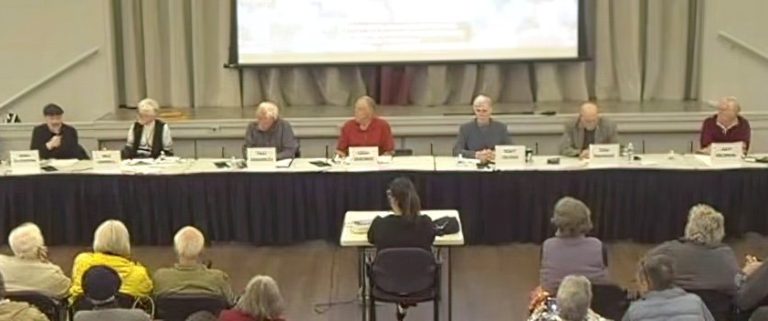
This is the second article covering important questions that OVA members submitted, hoping to have OVA director candidates answer them during Candidates Night. The first article, Candidates Night: Questions Asked, listed the 13 questions (out of 49 submitted) that were asked and then answered by the candidates at Candidates night.
As you can see, there were many submitted questions that were not asked during Candidates Night, not just the category announced, i.e. questions to specific groups of candidates. This article will list 13 of those (there is no way for me to know about all of them), along with candidates’ answers when they responded to an Email from me asking them these questions. It may also contain responses made by candidates directly to questioners, especially in cases where no response was made to my query with the list of questions below, and on Nextdoor when a question was posted there and there was a reply by one or more candidates.
In addition to relaying candidates’ answers verbatim herein, I may interject my own words in three forms, from most factual to most opinion content:
-
Author’s notes – to add factual information that may be relevant
-
Author’s interpretation – when direct answers were not given but I have information from other sources, such as Nextdoor responses by the candidate or candidate answers to questioner Email, I may provide my best judgement of what I believe the candidate’s actual position is on the issue
-
Author’s commentary – when a candidate seems to be avoiding giving a straight answer, or otherwise playing political games, I may call him/her out
My goals for this article are two-fold: first, to identify issues of importance to the OVA membership that were not well covered at Candidates Night and, second, to inform the OVA membership about how candidates for the OVA Board of Directors view these issues, as far as I am able to do so. In order to get this article to publication in time to be meaningful to voters, I only gave the candidates a few days to respond, and that during the flurry of activity leading up to the mailing of the ballots. So if the candidate did not respond to a question, which I will denote by “No response”, it may mean that he or she was over-committed this week and had not time to respond, or that he/she thought other activities were more likely to earn votes, or that he/she considers The Oakmont Observer to be somehow disreputable, or that he/she doesn’t want to expose his/her positions on these issues to public scrutiny – in most cases, I have no way of knowing why there was no response.
Finally, after covering these questions, I will my candidate-by-candidate summary of what positions each candidate stands and their style of governance. A lot of this will be I-don’t-know, but I would like to share what I do know. My intent in this article is not to advocate any candidates over any others; however, I will identify unwillingness to state their positions, because I believe that shows disrespect for Oakmont Observer readers and indicates a willingness to engage in political manipulation.
This article will be long, in order to contain as much relevant information as possible. You may use the following Table of Contents to identify questions you may be interested in and therefore to locate them quickly:
TABLE OF CONTENTS
Questions related to dues and fiscal restraint
Question 1: Fiscal Restraint
Question 2: Fiscal Responsibility
Question 3: How to Pay for Expensive Projects
Question 4: Competitive Bids
Questions related to membership referenda, voting and Bylaws
Question 5: Membership Empowerment
Question 6: Bylaws Improvement
Question 7: Bylaws Article XII BRC Proposal
Question 8: Pledge to Not Weaken Power of Members
Question 9: Member Vote on High Expenditures
Question 10: Member Vote on High Expenditures
Questions addressed to specific candidates
Question 11: To Iris Harrell: New Berger
Question 12: To Tom Kendrick: “Breathing Space” behind the CAC
Question 13: To Jeff Neuman: Vision of Oakmont
_________________________________________
Questions related to dues and fiscal restraint
Questioner: Janette Supp
Question 1:
Fiscal Restraint – Over the past ten years, OVA dues, even excluding the large 2020 increase, have gone up an average of 2.6 times the rate of increase of the California Consumer Price Index. Would you support a policy goal of keeping OVA dues increases to no more than some index of inflation, or at least to, say, no more than 1 ½ times an index of inflation? My suggestion is for a policy goal, not a hard limit which might sometimes prevent the Board from fulfilling its fiduciary duty.
If you would not support such a policy goal, why not?
Reference: Dues Inflation in Oakmont, The Oakmont Observer, Feb 8, 2024
Answers:
From Jerry Gladstone: NO, indexing the rate of dues growth to the inflation growth rate, Social Security COLA, or the CPI makes is unrealistic and impractical. The rate of dues increases consists of four components:
-
Factors that are not in OVA’s control: insurance, labor, legal and accounting services, materials, and supplies costs, and servicing the current large loan. This could also include legal and ordinance compliance.
-
The costs of safety and ADA compliance: work towards securing an emergency egress from Oakmont, safety (deferred maintenance, especially trees, and broken pavement), repairs, and ADA modifications.
-
Low-cost upgrades to enhance what we already have. Examples: partitions for meeting rooms, revised scheduling system, flooring, lighting, consultant studies, surveys.
-
Capital improvement projects and servicing any new loans.
Items number 1 and 2 define the minimum budget and the rate of dues increase; numbers 3 and 4 are discretionary.
From other candidates: No response.
__________________________________
Questioner: Malka Osserman
Question 2:
Fiscal Responsibility – as life in California for many of the retirees is getting more expensive re PGE huge bills and inflation the thought of future undertaking of a big expenditure like building a new Berger gets scary for many of us. Where do you stand on that issue? There is no appetite for most of us for more dues and assessments. Our lives here as is are precarious. The threat of fires and earthquakes keep us tense. Insurances going up and up are difficult for us. Yes it is nice to have first class amenities, but it is also OK not to fix what isn’t broken and to make do with less. We don’t want rich OVA board members who want to leave legacies by way of building fancy amenities. We want real people with real feelings for all of us middle class and less affluent.
Answers:
From Jerry Gladstone: Response was to refer to his answer for question # 1.
From other candidates: No response.
__________________________________
Questioner: Shirley Philips
Question 3:
How to Pay for Expensive Projects – If Oakmont goes ahead with expensive projects that are new amenities, how would you propose Oakmont pay for them? A special assessment that exceeds 5% of Oakmont’s budgeted gross expenses would need membership approval. However, if Oakmont plans to borrow the money there would be no membership vote. We would end up with dues increases over multiple years.
Answers:
From Jerry Gladstone: All expensive projects must be voted on and approved by the membership whether they be financed by an assessment or a loan. The new quorum rules of the revised Bylaws will provide for approvals that are more easily accomplished. I favor loans as the beneficiaries of large capital improvements will be future members, they should provide the funding. These loans cannot be gamed, they too must be voted on.
From other candidates: No response.
__________________________________
Questioner: Steve Edwards
Question 4:
Competitive Bids – Why are projects similar to the East Rec remodel not required to get at least three competitive bids, and why are they written in a way that requires OVA residents to pay all overages?
Answers:
From Jerry Gladstone: YES, all bids, even for smaller projects, should have a minimum of three competitive bids submitted. All bid proposals must include project specifications, deliverables, time estimates, and costs; all in writing. Good contracts should place risk of overages on the contractor. I do favor incentives if the project is successfully completed in less time than contracted for. This is standard business practice and that which I followed during my career.
From other candidates: No response.
__________________________________
Questions related to membership referenda, voting and Bylaws
Questioner: Bruce Bon
Question 5:
Membership Empowerment – Many of us believe that the OVA membership should have the final say on whether or not to expand OVA’s facilities footprint with major capital improvement projects. The OVA Project Oversight Process includes a go/no-go decision at the end of phases 1, 2 and 3. Would you support requiring an OVA membership referendum as part of these go/no-go decisions for capital improvement products exceeding some cost threshold?
If you would not support this suggestion, why not?
Reference: Oakmont BOD Project Oversight Process, as adopted by the OVA Board in 2022
Answers:
From Jerry Gladstone: YES, major capital improvement projects should have membership approval at appropriate “referendum” points. Changing the character and costs of Oakmont is all members’ decision.
From Tom Kendrick: Transparency and discussion with the community are essential and must to be ongoing on all matters of community interest. Membership votes for significant expenses are mandated by California law, as they should be. Membership votes on other matters would have to depend on the specific issue and the financial threshold involved. In general, the elected directors have both the responsibility and obligation to make OVA decisions (and in discretionary situations, farming decisions out to member votes would expose the volunteer board members to personal liability).
Author’s interpretation: If it is not obvious to the reader of Tom’s answer, the answer to the primary question is NO. He will not “support requiring an OVA membership referendum as part of these go/no-go decisions for capital improvement products exceeding some cost threshold”.
Author’s commentary: I have to point out two half-truths in Tom’s reply. First, there is no California law that mandates membership votes as applied to OVA, unless (1) the Board finds it necessary to increase dues by more than 20% within a single year or (2) the Board finds it necessary to make a special assessment in excess of 5% of the annual budget (i.e. around $350,000 for OVA’s $7M annual budget). See here. Just as an example where no vote would be necessary, the Board could raise $10M using a 7%, 15-year loan, for around $19/member/month, or a 15% dues increase, thus keeping the dues increase well below the 20% threshold and requiring no special assessment. Second, related to director liability, all directors are protected by OVA Directors and Officers Insurance, except in the case of gross negligence, so personal loss is highly unlikely. I have never heard of a case where an HOA director became liable for obeying the will of the membership in turning down a discretionary capital improvement, and I challenged Tom to cite such a case – no response. Caveat: I am not an attorney, but I am fairly certain of the facts I just asserted. If anyone with legal knowledge can point me to evidence to the contrary, I will gladly admit that I was wrong and change this passage to match reality.
From other candidates: No response.
__________________________________
Questioner: Janette Supp
Question 6:
Bylaws Improvement – The California Real Estate Code, in a section entitled “Reasonable Arrangements-Governing Body Powers and Limitations” (Section 2792.21), recommends that HOA Bylaws should prohibit “Incurring aggregate expenditures for capital improvements to the common area in any fiscal year in excess of 5% of the budgeted gross expenses of the Association for that fiscal year”, except with the consent of Association members by a direct vote.
Would you be in favor of amending OVA Bylaws to conform with this provision, or with similar provisions as proposed by the OVA Bylaws Revision Committee in 2019?
Why or why not?
Reference:
California Real Estate Code, Section 2792.21
California Code of Regulations
Title 10 – Investment
Chapter 6 – Real Estate Commissioner
Article 12 – Subdivisions
Section 2792.21 – Reasonable Arrangements – Governing Body Powers and Limitations
Answers:
From all candidates: No response.
__________________________________
Questioner: Timothy Nelson
Question 7:
Bylaws Article XII BRC Proposal – Will you vote in favor of conducting an election to seek the approval of the OVA membership to amend the OVA Bylaws in a form not materially different from the May 7, 2019 draft Bylaws proposed by the Bylaws Revision Committee? Please answer “Yes” or “No” before explaining your reasoning.
(Note that Article XII of the draft Bylaws requires an affirmative membership vote prior to Board approval of plans for discretionary capital improvements to community recreational facilities/common areas that are expected to cost more than 20% (presently about $1 million) of the average of OVA’s audited, total operating expenses for the past three fiscal years.)
Reference:
Final report of the Bylaws Revision Committee to the OVA Board, included in the
Board Meeting Packet for May 21, 2019 – the BRC report starts on PDF p. 35, and the clean text for the Article XII BRC proposal is on PDF p. 78
Answers:
From Jerry Gladstone: The 60-year-old OVA Bylaws are a relic of the past; laws have changed and so have the times. The Bylaws Revision Committee (BRC) needs to be reconvened (hopefully they are willing) with the addition of Tim Nelson (an experienced attorney.) After re-examining the previous work, complying with applicable laws, and making any necessary adjustments, I would vote YES on holding an election to amend the Bylaws, including lowering quorum requirement.
From other candidates: No response.
__________________________________
Questioner: Hugh Helm
Question 8:
Pledge to Not Weaken Power of Members – It seems virtually everyone agrees the OVA bylaws need updated, but for many, not at the cost of the board taking power away from the members. Will you pledge, that if elected, you will not vote or support any change to the bylaws that weakens the power of the members, including the currently vested power of the members to hold special meetings to amend the bylaws?
Answers:
From Jerry Gladstone: YES. We must strive to achieve a representative democracy. The Board is elected to enact what the members ask, which is usually a compromise solution. If the Board’s decisions are unpopular, there needs to be an easy straight forward procedure to modify or correct. We do not want to weaken the power of the members, but we must also recognize the fiduciary responsibility of the Board.
From other candidates: No response.
__________________________________
Questioner: Janet Levy
Question 9:
Member Vote on High Expenditures – Are you open to inviting a member vote when it comes to HIGH expenditures? If No, please explain why not?
Answers:
From Jerry Gladstone: YES. I am in favor of a member vote for high expenditures. The exact threshold to be determined. This is allowed by law.
From other candidates: No response.
__________________________________
Questioner: Lyn Cramer
Question 10:
Member Vote on High Expenditures – Does each candidate favor or oppose a member vote, advisory or bidding, on discretionary projects above a certain amount, say $300,000?
Answers:
From Jerry Gladstone: YES. I am in favor of a member vote for high expenditures. The exact threshold to be determined. This is allowed by law.
From other candidates: No response.
__________________________________
Questions addressed to specific candidates
Author’s note: The following three questions were submitted by Kerry Oswald and addressed to individual candidates, so were excluded from Candidates Night.
Questioner: Kerry Oswald
Question 11, to Iris Harrell:
New Berger – Back in Feb .2018 Art Fitchenberg, David Deardon, and you Iris, summarized the work of the extensive (BAC) Berger Study. You and David argued for a NEW Facility by the Lawn Bowling area claiming it would only cost less than $2,000.000 dollars more than a Berger remodel. Do you still think this is a viable option for the future of Oakmont?
Answers:
From Iris Harrell: No response.
__________________________________
Questioner: Kerry Oswald
Question 12 to Tom Kendrick:
“Breathing Space” behind the CAC – When we bought the Golf Course, you as Board Vice-President mentioned creating a “Breathing Space” behind the CAC at Golf Course holes 3 & 4.
In an email response to me, which I still have, you explained “that the next project requiring a permit from Santa Rosa anywhere in that [CAC} complex would trigger removal of that waiver–even if nothing were to be expanded. Without a dual-level parking structure or some other change to increase the parking capacity, no project could advance there.” Is that still your conclusion?
And by the way you were seen with Archilogix measuring the CAC green area. Now stands corrected: Tom Kendrick notified me by email today that the date was actually Feb.6 “starting at 7 am I accompanied the representative of Browning Associates during his onsite audit of OVA assets that is required every three years for our Reserve Study.” I apologize mia culpe the timing of a Master Planner was auspicious to this event.
Answers:
From Tom Kendrick: No on-the-record response, Tom noted that his conclusion about parking still holds, but pointed out that it did not necessarily imply a parking structure, but might include “some other change to increase the parking capacity”. He also complained vehemently about the error in Kerry Oswald’s question, as it was submitted for Candidates Night and as Kerry posted on Nextdoor.
Author’s note: As noted in Kerry’s correction, italicized in the question above, the person accompanying Tom on Feb 6 was from Browning Associates, not ArchiLOGIX.
__________________________________
Questioner: Kerry Oswald
Question 13 to Jeff Neuman:
Vision of Oakmont – When you first ran for the OVA Board two years ago, I met you at a Meet & Greet. I asked you what your vision of Oakmont was and you said you wanted to see a multi-Story new Facility: an high domed Art theater, with OVA Offices over it, and a third floor for club and meeting spaces. Is that still your Director’s vision for Oakmont?
Answers:
From Jeff Neuman, via Nextdoor: Kerry, your question, as written, has a nodding acquaintance with truth, but little more. You have used carefully selected inflammatory words I have never used on this subject and omitted important words and context. I am trying to run a positive campaign and build personal trust with you, but that may have to be over.
It is true that at the candidates’ night two years ago, I said that “THERE’S NO REASON TO REPLACE THE BERGER CENTER IN THE FORSEEABLE FUTURE.” Words to that effect are also in my current candidate’s statement. I do not expect to cast a vote on this matter while a director. Can I be any clearer?
What is also true is that I followed that with: “But if a fire or earthquake happened to destroy the Berger Center, I do support replacing it with a 3-story building, where the bottom two stories are a multi-purpose space like we have, with office and meeting space above to eliminate the need for the expensive space OVA currently rents for its offices.”
I value Oakmont’s open spaces. When land gets valuable, you build up. I think open space is what will distinguish Oakmont from anything built along 12 in the coming decades, witness Mahonia Glen across from the Safeway. I also value Oakmont’s commercial and retail spaces. I’d like to see more services offered locally, and I do not favor OVA buying existing commercial parcels as at least one candidate has advocated. I’m very happy about the new memory care facility planned for the building west of the Wells Fargo.
Saying what I would support replacing Berger with, while omitting the conditions under which I would have that conversation, is dishonest.
I have never used the words high, domed, art or theater in this context. Please be fair to me, and honest with Oakmont.
Kerry Oswald’s reply, also via Nextdoor: Jeff I am sorry to report I will have to now totally disagree with your presentation. I suddenly remembered that I had recorded candidates conversations a couple of years ago and I found yours (C-23 20min.44sec)- you can have a copy of it if you want. I was willing to concede that we might have had a misunderstanding, now I don’t think so.
Anyway, based on our recorded conversation you said nothing about “if the Berger was destroyed by fire”, you said “I’d love to see an auditorium 3 stories high”, “land is valuable and that’s when you build up”. You talked about moving the Berger to the corner of its present location. Building a new Facility with a capacity of 750-804 Fire Marshall code. You said this was a mental concept and you expected it to be 10-15 years to realize.
______________________________________________
General comments
I can’t explain why, but candidate response to my request for answers to these questions was very poor. Jerry Gladstone did an excellent job of replying to most of the questions, first answering YES or NO and then providing a short explanation or justification for his answer. It’s not rocket science to answer honestly and simply, folks!
I am not here judging Jerry’s answers, but I do suggest that his willingness to take a position and let everyone know what his position is, is a sign of respect for the voters, and possibly a characteristic that you should take into consideration, along with many others, when you decide how to vote.
Other candidates did not respond directly to my call for answers to these questions, even though I made the request multiple times. In order to get this article to publication in time to be meaningful to voters, I only gave the candidates a few days to respond, and that during the flurry of activity leading up to the mailing of the ballots. So if the candidate did not respond to a question, which I denoted by “No response”, it may mean that he or she was over-committed this week and had no time to respond, or that he/she thought other activities were more likely to earn votes, or that he/she considers The Oakmont Observer to be somehow disreputable, or that he/she doesn’t want to expose his/her positions on these issues to public scrutiny – in most cases, I have no way of knowing why there was no response. The exception to this was Tom Kendrick, who responded belligerently – see partial copy of the exchange that follows.
This exchange was initiated when Tom Kendrick replied to my initial request for answers with an Email that was copied to all candidates. Because he sought to unfairly discredit The Oakmont Observer to all seven other candidates, I felt compelled to respond, copying to all of them. In the exchange that follows, Tom’s words are in normal type and my responses are italicized:
Nope. [Tom’s reply to my request for answers to be published in this article]
Fine, your choice [not to respond], though I do feel free to quote whatever you say in an Email to me.
Bruce, your bona fides are horrible at this point, so no one should feel any obligation to respond to you.
No one has any obligation [to respond]. I am quite willing to publish “No response” or, perhaps, in your case, “Emphatically refused to respond”. But keep in mind that you are refusing to respond to all who have posed these questions or had similar questions, not just to me. And, with the almost universally positive feedback I have received from the community, I am happy to stand on my “bona fides”. Your own credibility is beginning to fray when you attack respectable members of our community as “nutcases” or “delusional” — your respectability facade is slipping.
The accumulating misinformation on your OO site and your explicit retraction of your earlier assertion that you “will publish almost any article that I, as Editor, judge to be civil and that to my knowledge does not contain false information” make it an untrustworthy source.
To paint the entire [Oakmont Observer] site as untrustworthy simply because some of the authors express opinions that you don’t like is clearly a political act. My statement still stands — show me any retraction. I have not knowingly published false information. The closest thing that I can think of is that some authors may have misunderstood Oakmont 2030 idea lists as potential project lists, but that, in fact, is not far from the truth about what they are. If this type of misunderstanding bothers you, then you should comment to the article in question explaining your contention. But instead, you want to convince me that grey is black and to have me be the enforcer of your view of the world. No, I won’t do that. If you have a specific complaint that something is a falsehood and can back up that complaint with evidence, I will take it under advisement, but as I don’t trust you any more than you trust me, the evidence should be solid, and it would be better if you convinced the author of the validity of your perspective than if you try to convince me.
As I understand it, the Oakmont 2030 Project List (which is the real title, I didn’t make it up) which was given to ArchiLOGIX, is nothing more than a subset of Oakmont 2030 “ideas”, with the more ridiculous of them removed, and it still includes some pretty big potential projects. You seem to quibble over the words “idea” vs “project”, claiming that a project is not a project unless accompanied by architectural plans.
Anyone who wishes to ask these questions (or any of the other dozens submitted that were unasked) is free to pose them during any of the upcoming five candidate events (or directly to any of us–we are all here; none of us are on Mars).
What Tom says is true, but not very useful because such answers do not reach many people and are less likely to be well thought out than answers in writing. There is evidence that a popular article in The Oakmont Observer this month [February] (of which there have been several) is read by well over 1,000 people, almost all of whom are likely to be Oakmont residents (just because nobody else would have much interest).
Author’s note: While the first line of Tom’s Email was “Nope”, he did go on to provide an answer to the question I submitted, and that answer is included above as an answer to Question #5. But see also the Author’s commentary about his answer.

