
Values for Oakmont Governance
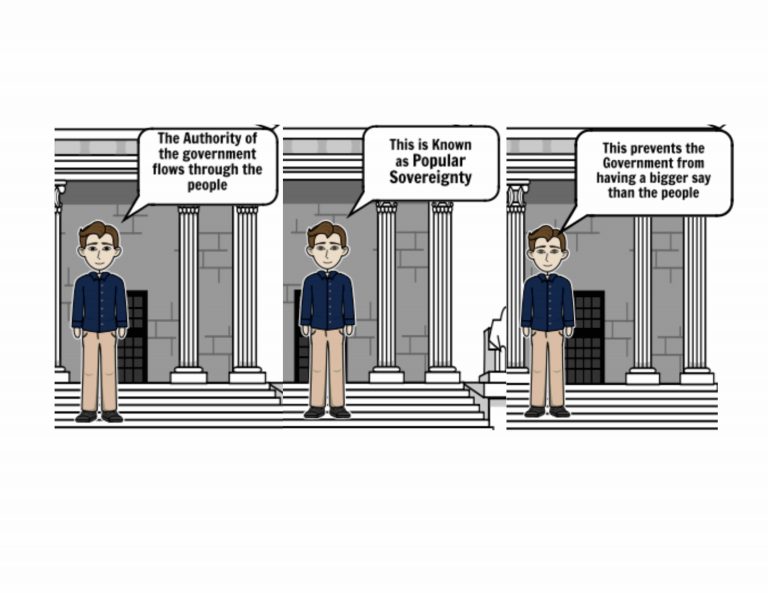
The most fundamental value on which all governance should be based is popular sovereignty, the notion that all authority for government comes from the governed and only from the governed. With respect to the Oakmont Village Association (OVA), the “governed” means all voting members of OVA, because we are not only the owners of our individual properties, but, through our votes, we control all OVA property. My ideal is that the OVA Board of Directors (BOD) should execute the will of the membership, as closely as is practically and legally possible, regardless of whether the directors agree with that will.
The BOD should not act like a developer or realtor or investor, “investing” our money in such a fashion as to increase our home values, unless that is the expressed will of the membership as a whole (not just a few members). Similarly, the BOD should not be concerned with what future buyers might want, except as that is a concern of the current membership. And they should not plan expansion of OVA facilities, except as that expansion is desired by the membership and the membership is willing to pay for it.
A fundamental characteristic of governance is the split between direct democracy, wherein the governed would vote on all decisions, and pure representative democracy, wherein the governed elect their representatives and thereafter their representatives make all decisions, with no obligation (other than wanting to get reelected) to listen to the voices of the governed. Direct democracy is not practical in Oakmont, much less in larger contexts like city, state and national governance. But representative democracy, in the extreme, runs a high risk that the policies of the governing body, i.e. the BOD, may diverge from the will of the governed. This is because most people who run for the BOD have some notion of what they want to accomplish, and these personal agendas, even if motivated by what they think is best for Oakmont, may not agree with the consensus view of OVA members.
So some middle ground is desirable, in which the BOD makes most day-to-day decisions, while the most important decisions are subject to direct control by the governed. This is similar to the national division of power, where the executive branch executes the decisions made by the legislative branch; but in the case of Oakmont, where we have no separate legislative branch and there are fewer “major” decisions to be made, it is practical for the most important decisions to be subject to membership votes.
Unfortunately, membership votes on key issues are not required by the current OVA Bylaws, which specify something much closer to pure representative democracy. It is only through the good intentions of the current BOD that we have as much transparency in governance as we do. But many of us question whether degree the current BOD is willing to follow the will of the membership, as opposed to what they believe is in the best interests of Oakmont. The attitude that they know better than the membership what direction Oakmont should take, is patronizing and offensive to many of us. The danger of that attitude is that the BOD may not represent the will of the membership, and may obligate us all to pay for and live with OVA actions that would never happen if the membership was faithfully represented.
If the BOD is confident that their vision of the future faithfully represents the vision of the membership, then they should be willing to submit the most important issues to a vote of the membership. Such membership votes, while not forbidden by the OVA Bylaws, are also not supported by them. Our BOD president argues that following the will expressed in a membership vote might violate directors’ obligation to execute their fiduciary duty; in other words, the membership might vote in a direction that was against the best interests of Oakmont and, in that situation, the directors would have a fiduciary duty to decide the opposite of the will of the membership. In his view, when we elected directors, we entrusted them to both create and execute the future vision of Oakmont.
The OVA Bylaws currently support representative democracy, with very little obligation placed on the BOD to follow the will of the membership, and this feature will not change under Bylaws revisions that I have heard proposed by the Bylaws Revision Committee. I have argued for things like dues increase restrictions and membership votes on expenditures above some threshold, but the Committee, in general, has not been very inclined to entertain such revisions. And even if they were, no Bylaws revisions will get on the ballot for voting unless they are approved by the BOD. I am confident that the Bylaws revisions proposed on the ballot next spring will improve our Bylaws, but I don’t think they will go far enough. If we want the Bylaws to limit the power of the BOD to act against membership wishes, and to involve the membership more directly on the most crucial issues, then we must elect future directors who will support these goals. It is as simple as that.
What I have expressed above represents my values for Oakmont governance, and I recognize that others may view this differently. As in everything else related to Oakmont, I believe that the ideal should be that the OVA membership is the ultimate authority, so the membership should determine the extent to which the responsibility for making important decisions is divided between the membership and the BOD.
If you have opinions about these issues, I encourage you to express them in Comments below, or in correspondence with the BOD. Or come to the first meeting of the Oakmont Forum, which will focus on proposed amendments to the OVA Bylaws, and make your voice heard! This meeting will be held in Suite B adjacent to the OVA offices (corner of Oakmont Drive and Laurel Leaf Place, park in the bank parking lot) at 10:30 am on Saturday, December 8.


Bruce Bon forcefully and persuasively argues that the OVA membership is the ultimate authority of the Associations and as such should command the vote on the most important issues facing our community.
He states: “If the BOD is confident that their vision of the future faithfully represents the vision of the membership, then they should be willing to submit the most important issues to a vote of the membership.”
But, but, but… as we have been told by the present board, they were elected to lead, not govern, and much like the national government today, the governed are being led to a vague and imaginary future based upon old ideas with no concern about the real costs or the disruption it will bring. No one seems to be concerned about the massive changes that are coming to America and the rest of the world, as we leave the expanding economy of the “comfortable” era to an uncharted future of factory closures, massive unemployment, stock market downturn and an unstable government that is more concerned about the rich than what is best for the people. I am not really opposed to upgrades, just the haste in the light of the rapidly changing financial landscape of this country. Planing is fine, but planning without having some sense of what you are planning for, is insane.
It should be noted that the active involvement of OVA members in the most important decisions is not, in theory at least, in opposition to the current OVA leadership. Steve Spanier, in his “Servant Leadership” president’s column (https://oakmontvillage.com/article/servant-leadership/), wrote “Servant leadership turns the traditional idea of leadership on its head. Leaders don’t dictate policy to constituents and stakeholders. Instead, they’re obsessed with fulfilling needs, which they understand cannot be learned without proactive solicitation, active listening and earnest discussion.” It should only be a short step from there to being willing to abide by OVA member wishes, as expressed in a vote of the membership!
As sympathetic as I am to your point, Bruce, a contrary view has merit. Under the Davis-Stirling Act all directors of common interest developments function as fiduciaries with “a duty to act in the best interests of the membership.” Is that interest always reflected accurately and at any given time by the will of a majority of members? I think most people will agree, not always. One need only chronicle the ever shifting opinion of Americans on many subjects. Would we have the Community Activity Center we today have had the issue been subject to a vote of members?
What to do? I hardly favor giving directors carte blanche to ignore the wishes of a majority of Oakmont homeowners, particularly on large capital projects. But neither do I favor replacing the board with electronic devices that would allow members to vote on every issue under consideration, the purest expression of “popular sovereignty.” A wise board has to adjudicate often conflicting forces and do its best. The best, if imperfect, remedy I see is to have contested board elections between candidates who campaign on substantive issues and members who pay attention.
Lyn — While I admit that a majority of members might sometimes exercise bad judgement, I would challenge anyone to come up with a case where a Board of Directors is found liable for obeying the will of a majority of beneficiaries (shareholders, OVA members, etc). Your point about the CAC may be correct — we might not have it had the decision to build it been put to a vote. I don’t claim that the members will always make the best decision, but I do claim that they should have the right to make the decision.
I agree with you (and said as much in my article) that allowing/requiring member votes on every issue is neither practical nor desirable. But I can’t agree that the best solution is to have member control only during Board elections. A Board can do too much damage within a year, through initiation of loans and building contracts, to undertake multi-year obligations that the OVA membership would never approve. I proposed to the Bylaws Revision Committee amendments that would require membership votes for excessive dues increases and for capital improvement projects exceeding roughly $1 million. These are not extreme suggestions, and many Board critics would like a much lower threshold, but they were soundly rejected by the committee. How else would you propose to avoid “giving directors carte blanche to ignore the wishes of a majority of Oakmont homeowners, particularly on large capital projects”?
My ideal, for some large capital improvement project (say a new building), is that the Board and committees would do a thorough job of coming up with a proposal, including professional estimates of both the initial costs and the ongoing maintenance and operations costs, and the impact on dues immediately and going into the future. They would then make the case for the project, through workshops/townhalls and education via the Oakmont News and articles on the website. Finally, they would submit it for approval by the membership, and would be required by (amended) Bylaws to abide by the result of the vote. This would meet my definition of both “servant leadership” and fiduciary duty. I would not expect such membership votes to occur very often.
A careful reading of both Bruce’s and Lyn’s comments reveal a concluding meeting of the minds. Both writers appear to favor a popular vote on major projects and issues, and are calling for the election of critically vetted candidates by an informed electorate.
“If we want the Bylaws to limit the power of the BOD to act against membership wishes, and to involve the membership more directly on the most crucial issues, then we must elect future directors who will support these goals.” (Bruce)
“I hardly favor giving directors carte blanche to ignore the wishes of a majority of Oakmont homeowners, particularly on large capital projects.
The best, if imperfect, remedy I see is to have contested board elections between candidates who campaign on substantive issues and members who pay attention.” (Lyn)
Bruce, I should have focused on your third sentence, because that is where we differ.
“My ideal is that the OVA Board of Directors (BOD) should execute the will of the membership, as closely as is practically and legally possible, regardless of whether the directors agree with that will.”
Nevertheless, please decide to run for the board. You’ll get my vote (and many others) and will, if elected, likely come to appreciate that your fiduciary responsibility includes applying your best judgment in deciding issues, above and beyond what is currently popular.
Thanks, Lyn. If I could clone myself, I’d give it a try, but I really do appreciate the time and effort any director has to put into that job. I couldn’t do it and still have a life outside the job!
I would like to see a style of leadership that focused more on education and guidance, rather than on decision and quick action, at least when it comes to any decision so big that it will change the nature of Oakmont. The current Board is generally following this line. Certainly they seem to be gathering information and being quite deliberate in decision making, but they resist any input from the rest of us that has any more authority than a voice at a microphone. They are afraid of the results if they allowed us to vote on major issues. All of us in Oakmont have lived long enough to have some level of wisdom and understanding that long-term outcomes are more important than current fads. I really believe that, if they chose to do so, the Board could convince us of whatever is really best for Oakmont. We are not children who think only of today. To refuse to allow us to vote on a really important issue tells me they don’t trust us to have the wisdom to make the right decision.
The other attitude that bugs me, which I have heard earnestly expressed by at least one current board member, is that future residents of Oakmont are somehow also their constituents. There is a bit of a self-fulfilling prophecy, in that, if OVA builds new deluxe facilities and doubles the dues (over a 5 to 10-year period) to pay for them, then people who are richer than current residents will (1) find Oakmont more appealing and (2) be more able to afford the dues than would less well-off potential buyers. We all should be concerned about the future of Oakmont, but this does not mean that the desires of hypothetical future residents should impact current policy!