
Oakmont at a Crossroads: Financial Capacity and the Berger Center Expansion
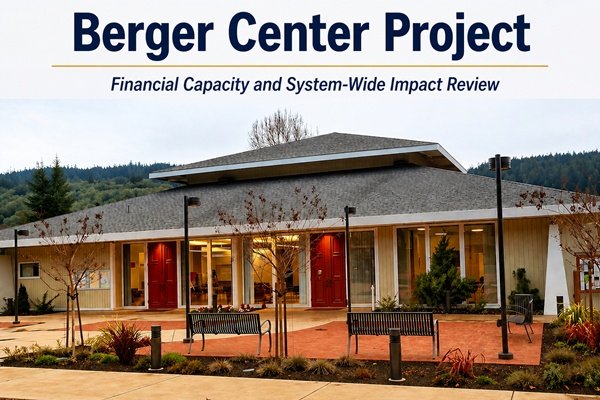
A System-Wide Analysis of Capital Needs, Debt, and Long-Term Sustainability
Introduction
Oakmont is entering a period where long-term planning and financial decisions are becoming increasingly interconnected. The proposed Tier 3 expansion of the Berger Center is one of the most significant projects currently under consideration, but it cannot be evaluated in isolation. It comes at a time when many of Oakmont’s core facilities, built decades ago, are reaching similar points in their lifecycle and requiring reinvestment. At the same time, operating costs, inflation, and existing financial commitments continue to shape what is realistically affordable.
This analysis looks at the Berger Center proposal within that broader context. Rather than focusing on a single project, it examines how a major new debt obligation would interact with ongoing needs across the entire campus. The goal is not to argue for or against any one approach, but to better understand the financial tradeoffs involved and how decisions made today may affect Oakmont’s ability to maintain its full range of amenities over time.
A Community Built in One Era, Aging in Another
Oakmont’s amenities were largely constructed between the 1960s and 1990s, reflecting a period of significant growth and investment in the community’s shared spaces. For many years, these facilities required relatively predictable maintenance, and major capital needs were spread out over time. That allowed repairs and replacements to be addressed incrementally, without placing sustained pressure on financial resources.
That dynamic is now changing. Many of these same systems, including pools, HVAC, roofing, and structural components, are reaching the later stages of their useful life at roughly the same time. Instead of isolated projects, Oakmont is now facing a convergence of needs across multiple facilities. This shift creates a more complex financial environment, where decisions about one project increasingly affect the ability to address others.
The 2025 Reserve Study reflects this transition. With reserves funded at approximately 40 to 45 percent, a significant portion of long-term replacement costs remains unfunded. This does not reduce the need for those investments. It changes the timing and financial context in which they must be made. As more systems require attention within a shorter window, the challenge becomes not only what to fund, but how to balance competing priorities across the entire campus.
How the System Is Currently Funded
Understanding how dues are currently allocated helps frame the impact of any new financial commitment.
From an annual budget of approximately $7.5 million, about 77 percent, or approximately $5.8 million, supports operations. These are the day-to-day expenses that keep OVA functioning, including staffing, utilities, insurance, maintenance, and general operations.
Approximately $900,000 per year goes to reserves through the Asset Replacement Fund. Another approximately $900,000 per year goes to the Capital Improvement Fund, which is the primary flexible funding source for major capital projects. In addition, approximately $478,000 per year supports golf-related subsidies.
These allocations reflect ongoing commitments, not discretionary spending. What remains after these obligations is limited. That means new financial commitments are layered onto an already constrained system rather than added to unused capacity.
What Needs Funding Now
The Berger Center is one visible need, but it is not the only one.
The central pool and cabana show clear signs of deterioration, including decking, coping, surfacing, tile, mastic, and structural components such as dry rot. Estimated costs are approximately $800,000 or more, depending on scope.
At the same time, the West Recreation Center pool is now under renovation, illustrating that multiple pool and facility investments are already occurring within the same timeframe. This overlap of projects highlights the challenge of funding multiple major amenities within the same financial window.
Across the campus, additional needs include HVAC systems nearing end of life, roofing and building envelope repairs, and structural maintenance across recreational facilities. These are not enhancements. They are baseline obligations required to maintain existing amenities.
A critical point in the current discussion is that the Berger boiler and chiller HVAC system has already been ordered, meaning the most urgent infrastructure issue at Berger is being addressed independently of expansion.
What Tier 3 Changes
The Tier 3 proposal introduces approximately 8 million dollars in borrowing, with annual debt service of $800,000 to $900,000.
It also includes refinancing an existing loan from approximately 4% to about 6.4%, extending the repayment period to 15 years. This increases total borrowing costs and extends the duration of financial commitment.
The impact is not just the addition of debt. It represents a structural shift in how Oakmont’s finances operate. The Capital Improvement Fund becomes largely committed to debt service. Financial flexibility is reduced. Future capital decisions are constrained. The system becomes less responsive to emerging needs.
In practical terms, resources that could otherwise be distributed across multiple facilities are redirected to a single long-term obligation.
The Compounding Effect
The Tier 3 decision does not occur in isolation. It interacts with existing and emerging pressures, including underfunded reserves, multiple facility needs occurring at once, ongoing golf subsidies, rising operating costs, inflation in construction and materials, and increasing energy costs.
Each of these factors affects cash flow. Together, they create a system with less margin for adjustment. Fixed debt payments remain constant even as costs increase elsewhere, reducing the ability to respond to changing conditions over time.
This is why a cash flow stress test is important. It does not simply ask whether OVA can make a loan payment. It asks what happens to the rest of the system once that loan payment becomes a fixed obligation.
A Decision About Priorities
This is ultimately not a question about whether the Berger Center should be improved. It is a question of how Oakmont prioritizes its resources across all facilities at this stage of its lifecycle.
A phased approach focused on Tier 1 and essential Tier 2 improvements would address necessary infrastructure, including Berger HVAC, allow capital to be allocated across multiple facilities, avoid new long-term debt, and preserve flexibility for future decisions.
This approach does not eliminate investment. It changes its scale, timing, and distribution. It allows OVA to focus first on urgent infrastructure and safety needs while leaving room to address other facilities as their needs become clearer.
Possible Purchase of OVA Office Building – Another Financial Consideration
The Board has also discussed purchasing currently leased OVA office space, and there is some indication that the building may be put on the market soon. While eliminating rent could provide long-term operating savings, acquisition would require capital or financing, introducing another competing demand on limited resources.
Owning OVA office space has been a goal for decades. Purchasing the current office location could eliminate the need for a far more expensive alternative illustrated in the Walk in the Park Central Area Redevelopment concept currently under review.
That concept includes construction of a new two-story building likely costing many millions of dollars. It would also require demolition of the existing central pool and construction of a replacement pool, with projected costs of approximately $2.8 million.
Viewed in this broader context, the office decision is not isolated. It is part of a larger set of capital choices that collectively shape Oakmont’s financial future.
Golf Subsidies and Contractual Obligations
An additional financial consideration involves ongoing subsidies and contractual obligations related to the golf course.
OVA members currently contribute approximately $478,000 annually in golf-related subsidies through dues. These payments are tied to agreements between the Oakmont Village Property Corporation, or OVPC, and the third-party operator, CourseCo, operating through an LLC structure. OVPC has indicated it is reviewing the objectives of the current contract, suggesting that financial terms and obligations may change.
A recent example illustrates how these arrangements can affect OVA resources. When CourseCo closed the Sugarloaf entrance and Pro Shop and proposed renumbering the course, OVA approved a transfer of $125,000 from the Capital Improvement Fund to pay for a restaurant roof that had reportedly been completed several years earlier. The Sugarloaf entrance subsequently reopened.
This demonstrates that OVA capital funds may be used to support golf-related obligations, even though these facilities are not included in the reserve study for core amenities.
The key question is forward-looking: as the contract is reviewed, and as financial pressures increase, should members expect changes in subsidy levels? If obligations rise, those costs would likely be reflected in dues. In an already constrained system, this adds another layer of financial uncertainty that should be considered alongside all other capital and operating commitments.
Why Information Matters
A General Manager’s Facilities Audit Team has been engaged to gather data on the condition of Oakmont’s amenities over the last year. This is an important and constructive step toward developing a clearer understanding of system-wide infrastructure needs.
At the same time, it is not yet clear how complete the current assessment is across all facilities or whether it represents a fully integrated, system-wide analysis of capital priorities. The Berger Center three-tier proposal by Energy Systems Group (ESG) was presented to membership at last week’s Townhall. It was important to start with the Berger Center audit because the HVAC Boiler-Chiller units are at the end of their life cycle and a replacement unit has been ordered.
That distinction matters. Decisions of this scale, particularly those involving long-term financial commitments, are most effective when based on a comprehensive understanding of the condition of all major facilities, the timing of required repairs and replacements, and the relative urgency of competing capital needs.
As the work of the very important and effective Facilities Audit Team continues, making this information fully available to the community will help ensure that future decisions are grounded in a complete and transparent view of Oakmont’s infrastructure needs.
Before any final decision is made, OVA should publish information obtained by the Facilities Audit Team across all amenities and facilities with supporting documentation. A complete system-wide view allows for clear prioritization of capital needs, alignment between project scope and actual conditions, and more informed and transparent decision-making. Before the OVA Board commits membership to a new 15-year commercial loan with a principal and interest cost (truth in lending cost) of about $12 million to finance this project.
Financial Outlook: Dues and System Capacity
When viewed over the next three to five years, the financial impact of funding the Tier 3 Berger expansion alongside other known obligations becomes more apparent. The proposed borrowing of approximately $8 million would add an estimated $800,000 to $900,000 in annual debt service, effectively consuming most of the Capital Improvement Fund, which currently provides about $900,000 per year for all major projects across Oakmont.
Based on current membership levels, this debt service equates to approximately $14 to $16 per member per month, representing the direct financial impact of the borrowing alone. The Board presentation reflects only the loan portion of dues; total financial impact depends on how additional capital needs, reserve funding, and operating costs are addressed over time.
At the same time, additional capital needs remain. The central pool project is estimated at $800,000 or more, and reserve funding, currently at 40 to 45 percent, will likely require increased contributions to maintain long-term asset replacement. These obligations are layered on top of existing costs, including approximately $478,000 annually in golf subsidies, as well as ongoing operating expenses.
External pressures further tighten the system. Inflation is expected to continue in the range of 3 to 5% annually, with construction and energy costs often rising faster. These increases affect both capital projects and day-to-day operations across all facilities.
In practical terms, this combination of fixed debt, capital needs, and rising costs suggests that dues increases would be required over time. In combination, these pressures could exceed the impact of debt service alone, depending on timing and funding decisions.
A phased approach that avoids new long-term debt would not eliminate the need for dues increases, but it would likely allow for more gradual adjustments and preserve flexibility to respond to changing conditions across the community.
Conclusion
Oakmont is not facing a single decision about one building. It is facing a broader financial inflection point. The Berger Center expansion must be evaluated in the context of aging infrastructure across the entire campus, including pools, HVAC systems, roofing, and other essential facilities that are already requiring attention. The data makes clear that financial capacity is not unlimited. Committing to long-term debt for Tier 3 would dedicate a significant portion of available resources for many years, reducing flexibility at precisely the time when multiple needs are emerging simultaneously.
This does not suggest that investment should be deferred or avoided. Rather, it underscores that how and when investment occurs is critical. A phased approach focused on essential infrastructure allows Oakmont to address immediate and necessary improvements while preserving the ability to respond to future demands as they become clearer. In contrast, concentrating resources into a single large project introduces structural constraints that extend beyond the Berger Center and into the long-term financial health of the entire community.
At its core, this is a question of balance: between improvement and preservation, between ambition and financial capacity, and between present priorities and future obligations. The most effective path forward is one grounded in complete and transparent information, including a full understanding of system-wide facility needs. With that foundation, Oakmont can make informed decisions that sustain not only one building, but the full network of amenities that define the community over time.
Before committing to long-term debt, the community should have a clear, complete picture of all facility needs and the financial implications of addressing them together, not in isolation.
Sources
Oakmont Village Association — Home and Member Access Portal
Oakmont Village Association — Annual Budget Reports
Oakmont Village Association — Reports and Financial Documents
Oakmont Village Association — Board Agenda and Resolution Packet, March 17, 2026
Oakmont Village Association — Berger Center Town Hall, April 21, 2026
Oakmont Village Association — Central Pool Cost Modeling
Oakmont Village Property Corporation — Governance Materials and Documents
U.S. Bureau of Labor Statistics — Consumer Price Index
Community Associations Institute — Reserve Studies and Financial Best Practices
Note: Oakmont Village Association materials are available through member access and require sign-in.
AI Disclaimer
This analysis includes AI-assisted organization and modeling of publicly available OVA financial data. It is intended for discussion purposes and does not represent an official financial audit or projection.


Why not start with an honest look and answer from the OVA Board, incl., our Treasurer, for complete Transparency about the money Oakmonters give to CourseCo every year? Then, include the money we spend on the Mortgage, Insurance, etc., that the two money losing golf courses demand from Oakmonters? And, how much money, total, has been given to CourseCo. in the last 5 years since the Lease was signed Sept. 22, 2020?
Great job, Bruce! This explanation of OVA’s finances and priorities is essential and very easy to understand. I hope it gets the wide readership it deserves among the members.
Thank you Bruce for your clear explanations and common sense reasoning which, unfortunately, have not been very common among our OAK BOD members and community leaders in the last few years.
Correction. Good job, Debra!
Thank you Deborah for a concise and truthful picture of the fiscal situation. I, for one, do not wish to increase and then enslave my dues to debt service for the duration of a new loan which only funds a portion of the capital needs of the community. The East and West Rec Centers will still need repairs and replacements in the future. Do our dues then increase again to cover those financial needs?