
A Blue Tsunami — Implications for Federal Governance
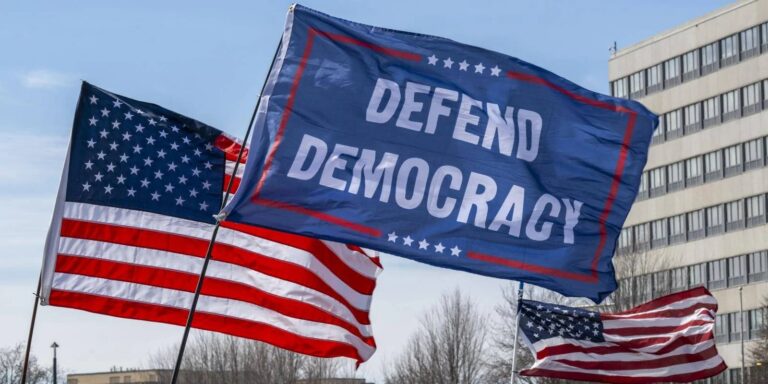
Democrats have exceeded all expectations in this fall’s elections. The result will be a Senate with at least 54 Democrats, and a House with at least 237 Democrats, according to projections by the New York Times as I am writing this. For detailed results, check out:
Midterm Elections Live Updates
(https://www.nytimes.com/live/2026/11/04/us/midterm-election-results-democrats)
Expect a continuing struggle between the Democratic establishment and President Trump. In light of that struggle, it seems important to consider the limitations of both sides in the aftermath of this election. In particular, it will require 60 votes in the Senate to end a filibuster, and the Democrats will have at most 56 seats, so ending a filibuster will require the Democrats to convince some of their Republican colleagues to join them. Overcoming a Presidential veto will be impossible, unless a considerable number of Republicans in both houses can be convinced to join — overriding a veto requires 290 votes in the House and 67 votes in the Senate. It is still possible, but unlikely, that the Democrats will control 290 or more seats in the House.
Implications
I have no particular expertise in politics, and in particular little or no expertise in the power of persuasion that is so necessary in politics. But I have lived for close to eight decades and watched as political trends have come and gone. I consider myself a moderate and an independent, and I bemoan the polarization that often makes it difficult for me to vote for either major party candidate. Following are some consequences of this election, as I understand the workings of government in this country:
- Democrats will control the agenda in both houses and will be able to investigate alleged Republican abuses, as well as to pass Democratic-agenda legislation.
- But Democrats will not have the votes to end a filibuster, so Senate Republicans will be able to block progress of legislation that is not to their liking.
- For legislation, the Democrats will not be able to override a Presidential veto, so, if they seriously want a bill to become law, they will be forced to craft it such that there is at least a hope of Trump not vetoing it.
- Trump’s ability to eviscerate major federal institutions will be largely unchanged, because, as President, he is the CEO of the government.
- Trump’s power to use Executive privilege to set various rules, regulations, and tariffs will remain largely unchanged (since the Supreme Court will continue to be very dominated by Republican appointees), but he will have to choose candidates who are acceptable to the Democrats or his appointments that require Senate approval will fail.
- Congress will probably pass some form of anti-gerrymandering legislation, but it will come to nothing if Trump vetoes it.
Commentary
For those of us who view Trump’s presidency as a disaster for American democracy, this election can only be an improvement, but we’re not out of the woods yet. If Trump was a traditional American politician, I would like the current situation. The President would abide by political norms, and compromises would be made, forcing governance to be somewhere in the middle while allowing programs supported by most Americans to go forward.
But Trump is anything but a traditional American politician. I fully expect him to continue to abuse his power in any way he can get away with. I expect him to use his veto a lot, possibly even vetoing legislation to extend the government’s borrowing power, thereby shutting down the federal government until he gets his way. I also expect him to continue to use Executive Orders to change federal policies in deleterious ways, and to continue to use his power to attack political opponents, whom he sees as enemies. Fortunately the Democrat-controlled Congress will be able to impose some limitations, but these problems won’t go away until Trump’s term in power is finally ended.
The Democrats have a major advantage for the next two years. I hope they don’t allow their progressives to hijack their party to grandstand for socialist-leaning programs, because if they do, they may squander their chances for putting a Democrat in the White House in 2028! Passing legislation that is too far to the left or that costs more than the nation can afford will likely incur Trump’s veto and will result in a do-nothing Congress. Like the mid-terms, 2028 could be more of a contest of who the voters hate more, rather than who they like better!
Please post your perspective in comments below, but try to be civil. We are all residents of this great country, with far more in common than separates us!

