
Central Oakmont – A Decade in the Making
As we delve into Oakmont’s community dynamics and weigh our options for board candidates, each with their own vision, including the ambitious expansion of Central Oakmont as outlined in the 2030 Project List*, it’s essential to draw upon the valuable insights from the 2015 ‘Voices of Oakmont‘ survey. This extensive effort aimed to capture the myriad desires, worries, and dreams of our diverse community, providing a solid foundation for making informed decisions and nurturing a sense of shared responsibility for the future of this community.
After the 2018 community discussions regarding the fate of the Berger Center, Director Karen Oswald’s poignant reflection resonates deeply. She noted in the Oakmont News article below, “In reviewing the comment cards provided by residents who viewed the options for the Berger this past summer, I found them to be very similar to the comments in the Voices of Oakmont. There is an overwhelming concern over cost and actual need versus perceived wants.” Karen’s words highlight the ongoing struggle faced by our board of directors – navigating between fiscal responsibility and addressing the genuine needs of our community.
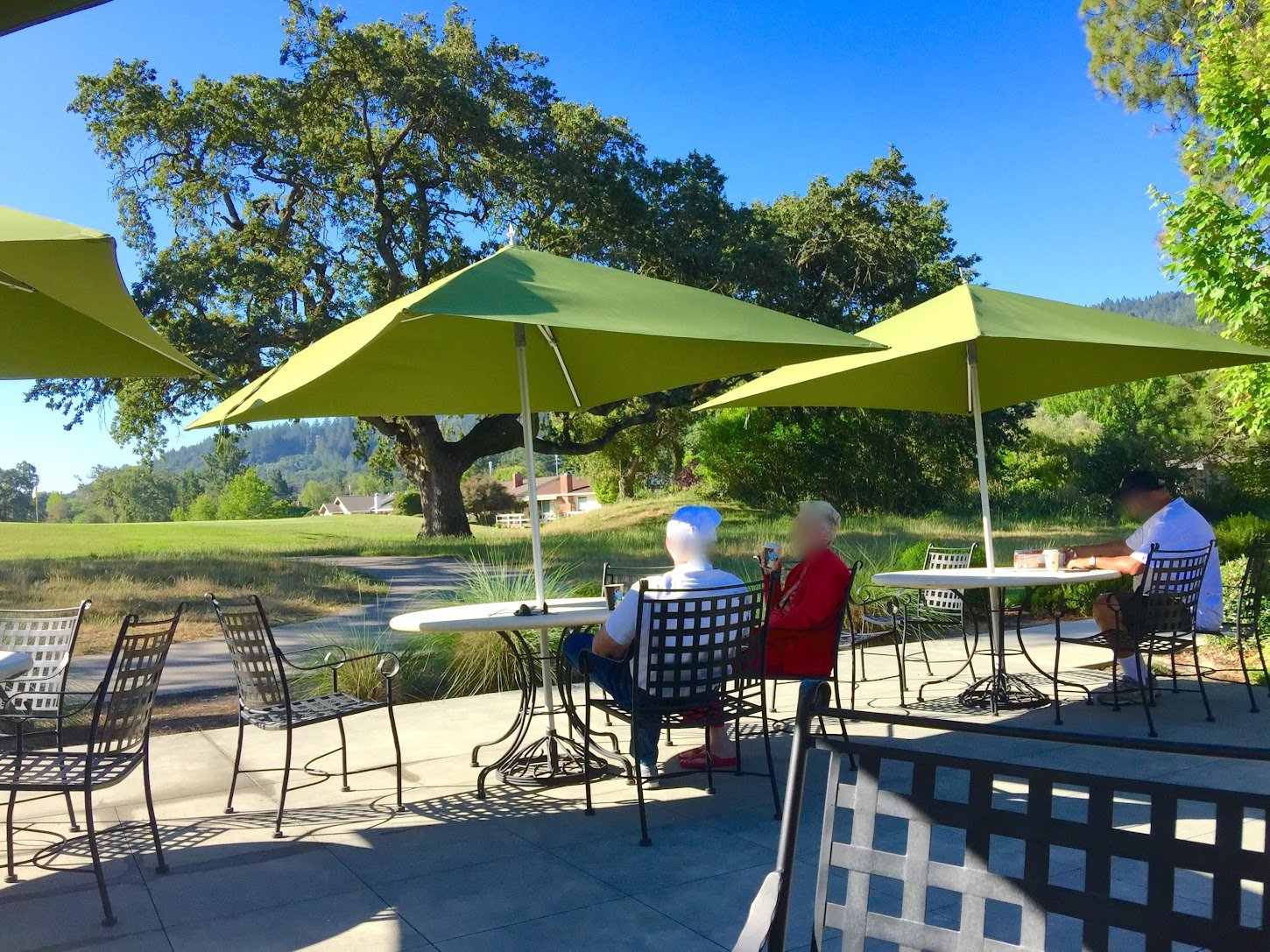
Respondents to the 2030 initiative rated “Preservation of Oakmont’s natural beauty and environment” a high priority.
Notably, the survey unearthed a generational narrative, with younger residents echoing distinct priorities reflective of their lifecycle stage and aspirations. Their yearning for modern amenities, coupled with a keen sense of environmental stewardship, underscores the imperative to evolve in tandem with shifting demographic tides.
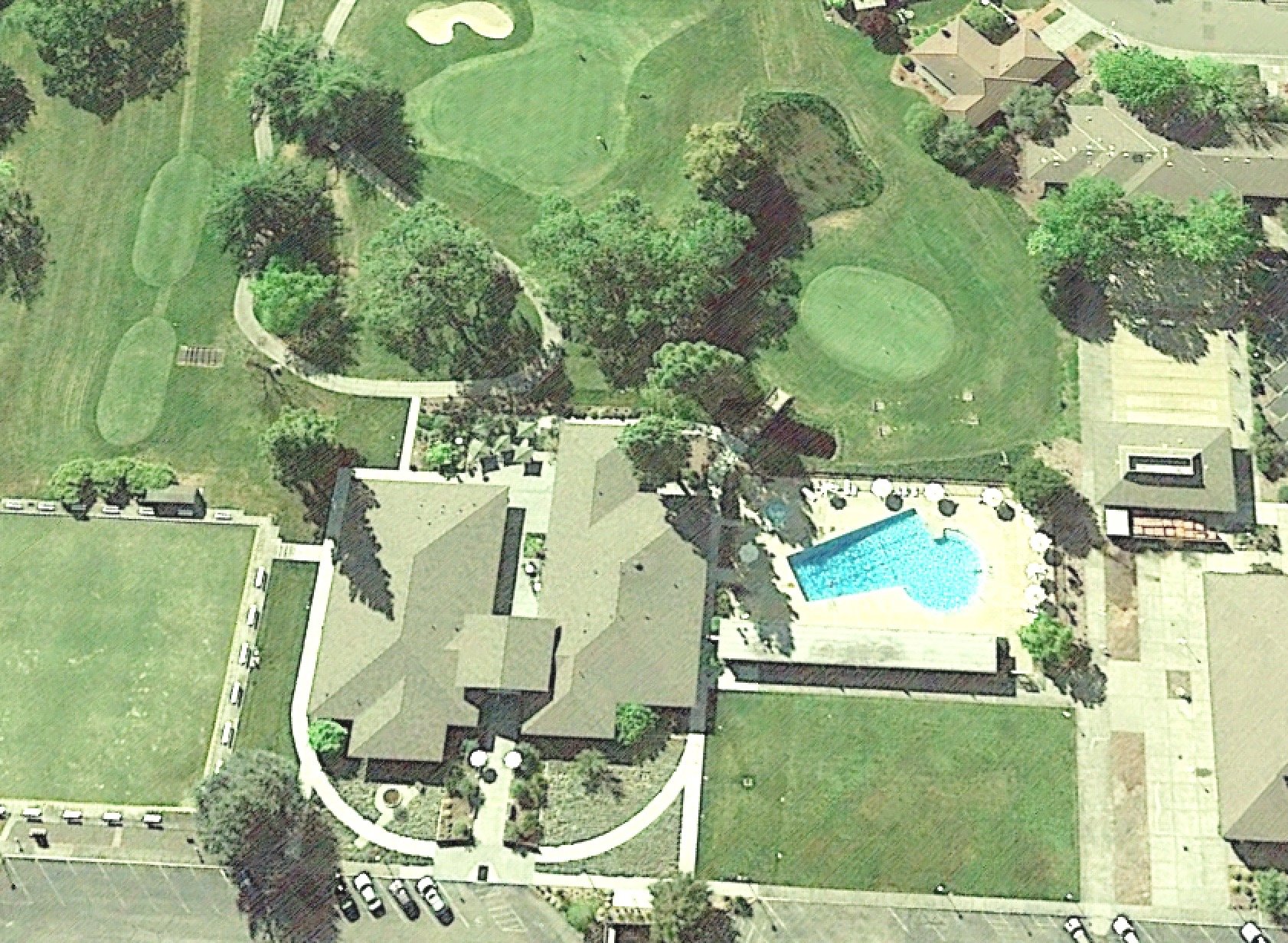
85% rated ‘Open Space’ as “Important”/”Very Important.” Ref. Voices of Oakmont
Yet, amidst this clamor of voices lies a poignant plea for responsive governance – a clarion call for inclusivity, transparency, and equitable representation. The resounding sentiment, encapsulated in the survey, underscores the imperative for leaders to listen to the collective wisdom of Oakmont’s residents.
As we approach this crucial election, let’s not just dwell on history, but rather, glean insights from recent events to inform our decisions ahead. By embracing the diverse voices within our community, the OVA and the board of directors can steer Oakmont into the future – resilient, inclusive, and always adapting.
As the current board and their 2030 Steering Committee forge ahead with their vision for Central Oakmont as outlined in the 2030 Project initiative, it’s crucial for residents to make their voices heard through voting. Let’s ensure our community’s future aligns with the collective will of its residents.
*Ref: Oakmont 2030 Project List provided to ArchiLOGIX to guide their activity and the 2015 ‘Voices of Oakmont‘ survey presented by Dr. Cirksena and Dr. Dibble on behalf of the Long Range Planning Committee.
The following is the article written by Michael Connolly in the Oakmont News, February 15, 2018
Board Votes to Proceed with Berger Remodel
The Oakmont Board of Directors voted at the February 6 [2018] business meeting to proceed with a $3.6 million remodel of the Berger Center, including full upgrades of the kitchen, stage, storage and audio-visual systems as well as high grade finishes. Directors Goodwin, Bettencourt, Oneto and Oswald voted for the motion, with Director Connelly voting no. President Young had left the meeting before the vote was taken. The vote followed a presentation of options and cost estimates by the Berger Action Committee.
The Berger Action Committee’s written defined goals for 2017 included: “Deliver to the OVA Board on or before January 1, 2018 three options for the board’s consideration and determination. The following is the list of viable options: 1) Remodel / expand existing Berger, 2) Build a new building and demolish Berger, 3) Build a new building and re-purpose Berger.”
Since 2014, the focus of three separate Berger committees has been on the remodeling of the Berger Center. Over the past year, the BAC continued with their research on the rebuild options and just recently retained a cost-estimator who provided costs, to include options of demolition or repurposing as well building a new building.
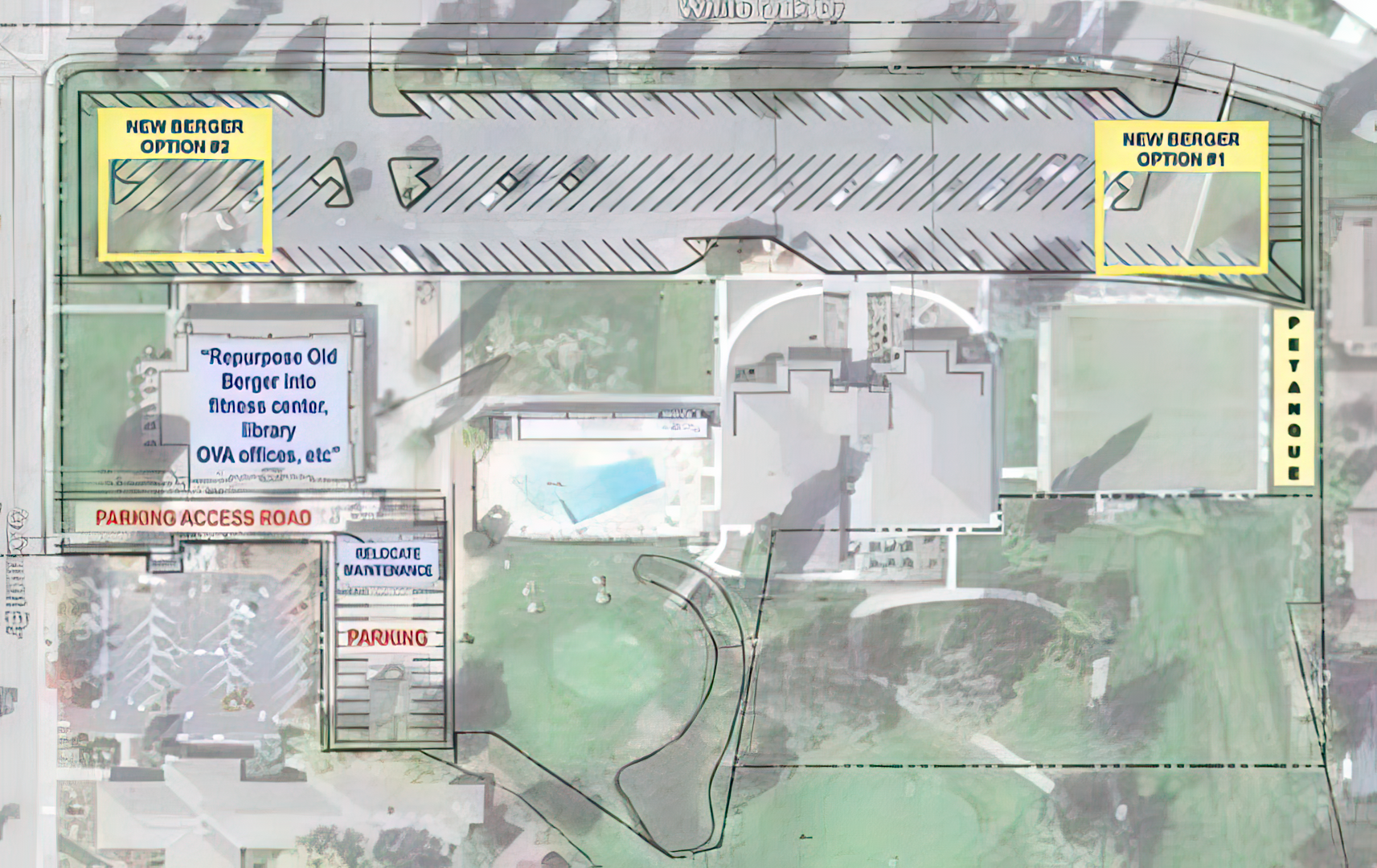
Options for new Berger were rejected in favor of Berger remodel
The presentation by BAC member Art Fichtenberg was expanded from the original three to a total of 12 options with cost estimates for different variations on the basic three choices. Fellow committee member David Dearden advised the board that there were “lots of arithmetic mistakes, you’re going to find them if you are looking for them, because we made them and we did not have enough time to clean it up.” Fichtenberg added that his quotes for “full upgrade” features were “guess-ta-mated” at $700,000.
The board was told that the estimates also did not include “soft costs.” Fichtenberg, elaborated by stating that it is too hard to do it accurately until the project has been clearly defined. Soft costs include fees for architects, engineers, managers and consultants, permits, reports, inspections, and the like. The total in fees paid over the past four years for professional Berger reports and consultants was not available as of the writing of this article.
Hazardous material removal costs could not be accurately estimated in advance. The cost estimates include “an allowance” of $125,000 for hazmat removal as there is not currently a fixed number for this cost. These costs would rise considerably in the event of demolition and removal of the current building as there are asbestos-laden tiles in the cement slab that would have to be removed.
In this regard, Fichtenberg said, “We do not have a bid from somebody who would charge us to remove all the hazardous waste if we were demo-ing the entire building. I don’t have that number.” He added, “In the remodel we have a set building plan, we could get a real number.”
After complimenting the committee for all of their work, Director Lynda Oneto asked Fichtenberg, Dearden and Construction Management Committee Chair Iris Harrell what they believed was the best option for OVA. Fichtenberg said he favored building on a different site in the CAC area and then repurposing the current Berger (Option 3 above). Dearden said that he originally favored remodel of the existing Berger but now was leaning toward the rebuild option. Harrell did not explicitly select an option but did say, “I don’t really want to tear this building down. I think it is the cheapest 10,000 square feet you will ever get. It is finding some way to keep this building.” She also said she did not think the current building would meet future needs.
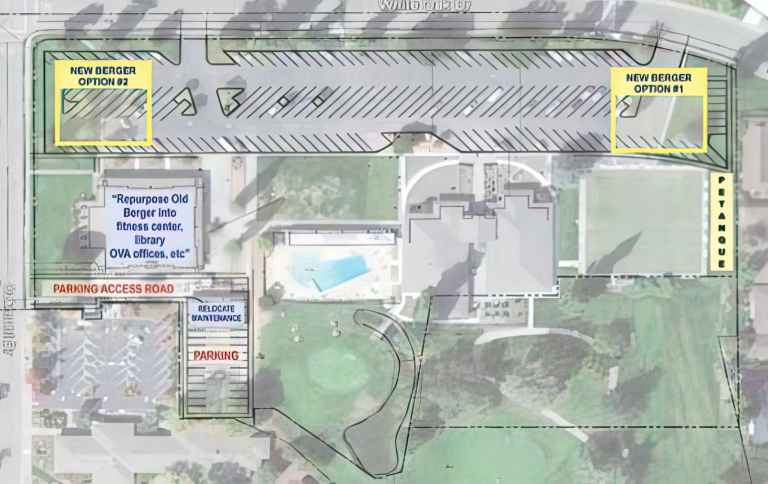
One location suggested for a new building was at the entrance to the CAC parking lot on White Oak closest to the lawn bowling green. A second option was at the opposite end of the parking lot near the corner of Oakmont Drive and White Oak. Building on the existing parking lot would require adding parking spaces elsewhere as would adding a new building and repurposing of the existing Berger.
The report estimates $260,000 “to add 40 parking spaces at former shuffleboard and old putting green areas” behind the Central Pool with another estimate of $450,000 to add 100 parking spaces “on adjacent land.” The expense associated with purchasing land from the Oakmont Golf Club, the engineering, and grading costs for repurposing the putting green and golf course to parking was not included in the presentation or the estimates.
One of the presentation slides referenced repurposing the existing Berger “into fitness center, library, OVA office, etc.” Oneto asked why the estimate for a new Berger building with a remodeled old Berger building did not include the costs of both the new building and the costs of repurposing of the existing Berger. Both Fichtenberg and Harrell said that there was no way to estimate the costs of repurposing the existing Berger until such purposes were known.
Harrell offered the opinion that “if this were going to just become a gym right now we could move the equipment in here.” Not addressed were the potential costs of accommodating locker room facilities or constructing OVA office space and library.
The cost estimates for Berger remodel on the same site were in the $2.9 to $3.6 million range. If all or part of these costs were added to the estimate for a new building with full upgrades at another site in the CAC, the dollar cost would be considerably more than the quoted $5.4 million.
Upon objections raised by Director Connelly and some members of the audience that the matter was not subject to a vote, Manager Hubred stated, “there was a discussion at the last board meeting that the presentation would be presented at this board meeting, it was announced in the Oakmont News, and members had the idea that it was going to be discussed at this meeting. It was listed on the agenda. The board does have the authority to make a decision.”
Director Carolyn Bettencourt said, “I also appreciate all the hard work that the committee has done. My question is we really have been studying the Berger since, what, five years now we have been talking about it? And I’m just wondering you know, at this rate would I ever see it in my lifetime?”
Director Karen Oswald stated, “In considering the options for upcoming projects I am very concerned about the experiences that we have continually had with overruns and escalating costs over past projects such as the West Rec. and the proposed Central Activity pickleball project. And I am committed that this does not happen with the East Rec. and the Berger Center.” She added, “In reviewing the comment cards provided by residents who viewed the options for the Berger this past summer, I found them to be very similar to the comments in the Voices of Oakmont. That is an overwhelming concern over cost and actual need versus perceived wants.” She said a large majority of those who chose to get involved and offer an opinion wanted a remodel.
The stated plan is to perform the remodel and upgrading of the Berger Center in phases, scheduled to begin in 2020, with minimal disruption to the community.


Greg Gewalt wrote the definitive account on the developmental history of Oakmont over the pivotal past 10 to 15 years.
In understandable language he explains the connections and the correlations of Oakmont’s governance as regards its ascertainment of the status quo, and the needs and plans for the future of our village, enunciated by the leadership, as well as the concurrent opinions by our residents.
For all newcomers and resident alike an invaluable resource to the understanding of Oakmont and its reason of being and becoming.